
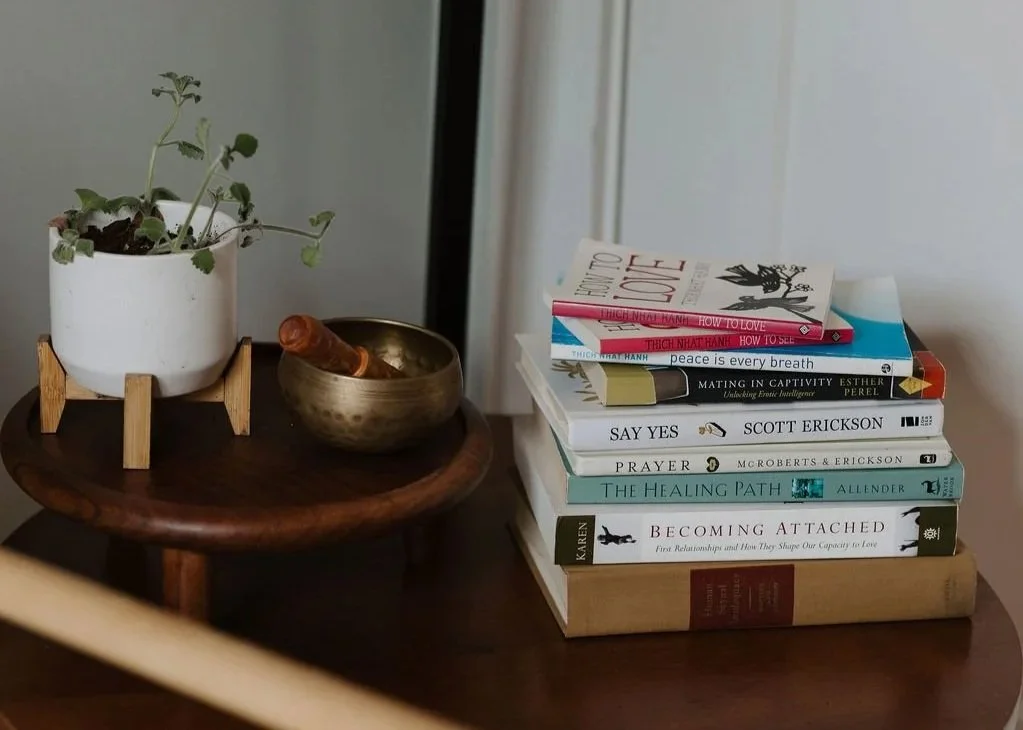
“I didn’t realize that I felt this way.”
If you have read this far on the website, thank you for your curiosity. Hopefully at this point, you have some questions answered around psychodynamic therapy and how it seeks to explore what is lingering in the unconscious. Maybe this has relieved some uncertainty for you around participating in this form of therapy, or perhaps it has only sparked your curiosity further. You may be the type to do a deep-dive on a topic before you try it. If you have ventured out and begun exploring on your own, you have likely stumbled across words and phrases like “therapeutic frame,” “countertransference relationship,” or “projective identification.”
Yet I know all too well (from personal experience) that acquisition of knowledge does not immediately alleviate anxiety.
Beginning therapy can feel daunting on its own. It can feel even more frightening if the only picture you have in your head is that of an analyst sitting in a dark corner behind you while you lay on an unfamiliar couch with your eyes closed.
Clinical terminology aside, what do we actually do in a session together? What happens after you walk into the room?
As our session begins, I will welcome you into the office and invite you to sit on the couch across from my chair. I’ll then ask you this question: “Where are we going today?”

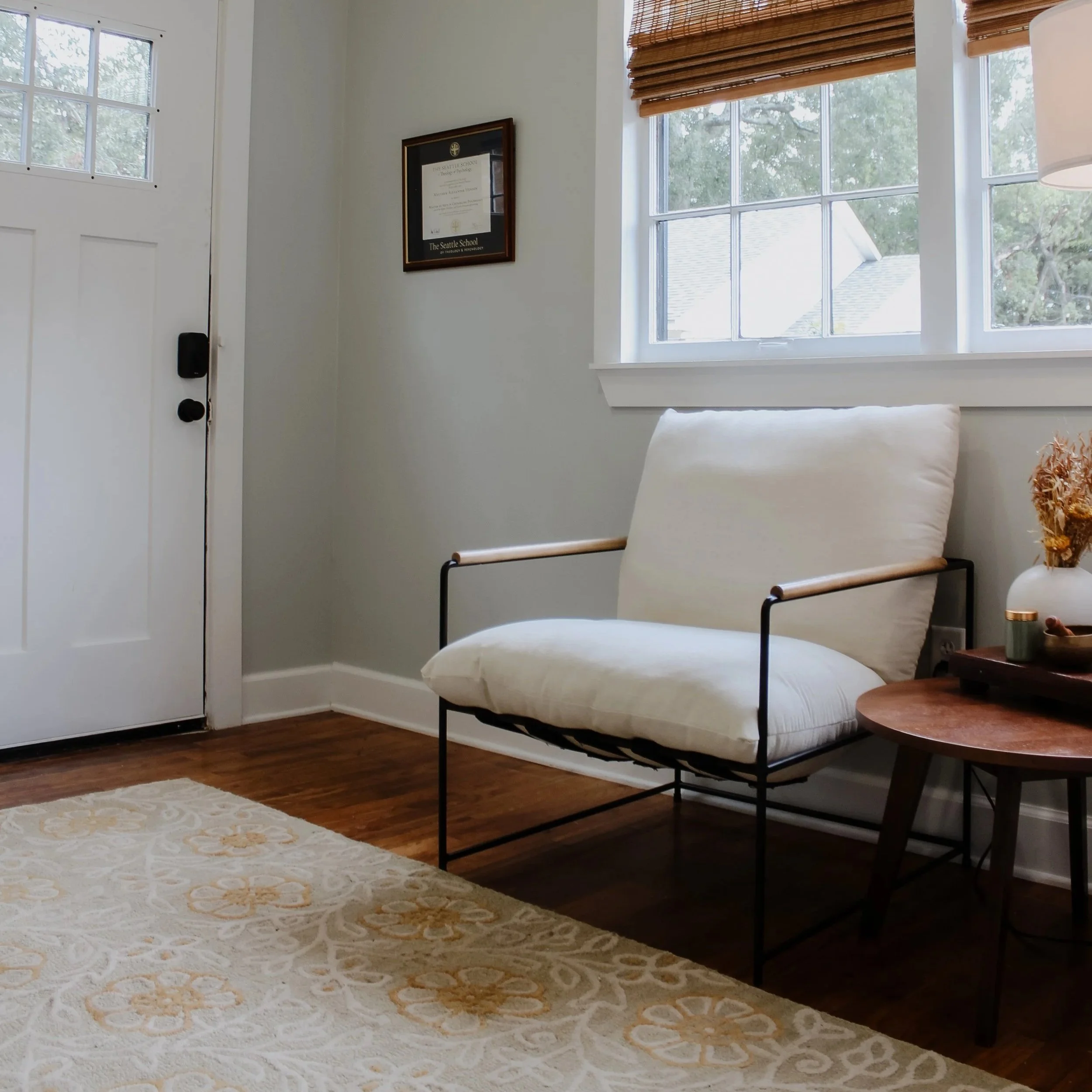
You may engage that question in any way you choose. Perhaps you have a story that you need to tell. Perhaps you had a dream the night before that you cannot remember, you just know that it left you with an unsettled feeling. Maybe you have a headache that mysteriously appeared four days ago that you can’t get rid of. Maybe you heard a song on the drive over that made you cry and you don’t know why. Perhaps you don’t have an immediate answer to the question, and you simply want to sit together in silence.
As you describe your experience, whatever the experience may be, I am seeking to listen deeply to what you are communicating. Furthermore, I strive to feel, as much as I can, what this experience felt like for you. I may ask questions or offer observations about what you are telling me.
As we process this information together, you might notice a spectrum of interesting things emerging. You may be telling a story that you thought had no impact on you, yet you feel your eyes beginning to well up with tears. Or perhaps, while you are talking, a memory resurfaces that you have not thought about in years. Maybe the dream that you had forgotten suddenly reveals itself in vivid detail. You might find yourself saying “I don’t know how that’s connected,” or even “I didn’t realize that I felt this way.”
Together, you and I examine these pieces and see if we can make connections. These may be clues inviting you to welcome in feelings that have needed a home for a long time. Don’t feel the pressure to orient your stories chronologically. This type of processing is not necessarily linear and may, at times, even feel disjointed.
Remember, in this process, you are the expert in your emotional experience.
I may say something that causes you to feel quite angry at me. You are welcome to voice and explore your anger. Or I may make an observation that strikes an old, deep chord within you. You can bring that response into the room with tears, laughter, silence, talking, or any other creative expression that you feel captures the emotion. Together, we will hold it, observe it, and determine what you want to do with it now that you’ve found it.
I hope this offers some clarity about this process. Psychodynamic work can feel interesting, unpredictable, and at times, frightening. You are not navigating the deep water alone.
For more information about my services, click here. If you’re ready to schedule a consultation or a session, reach out to me. I would be honored to work with you in the uncovering.
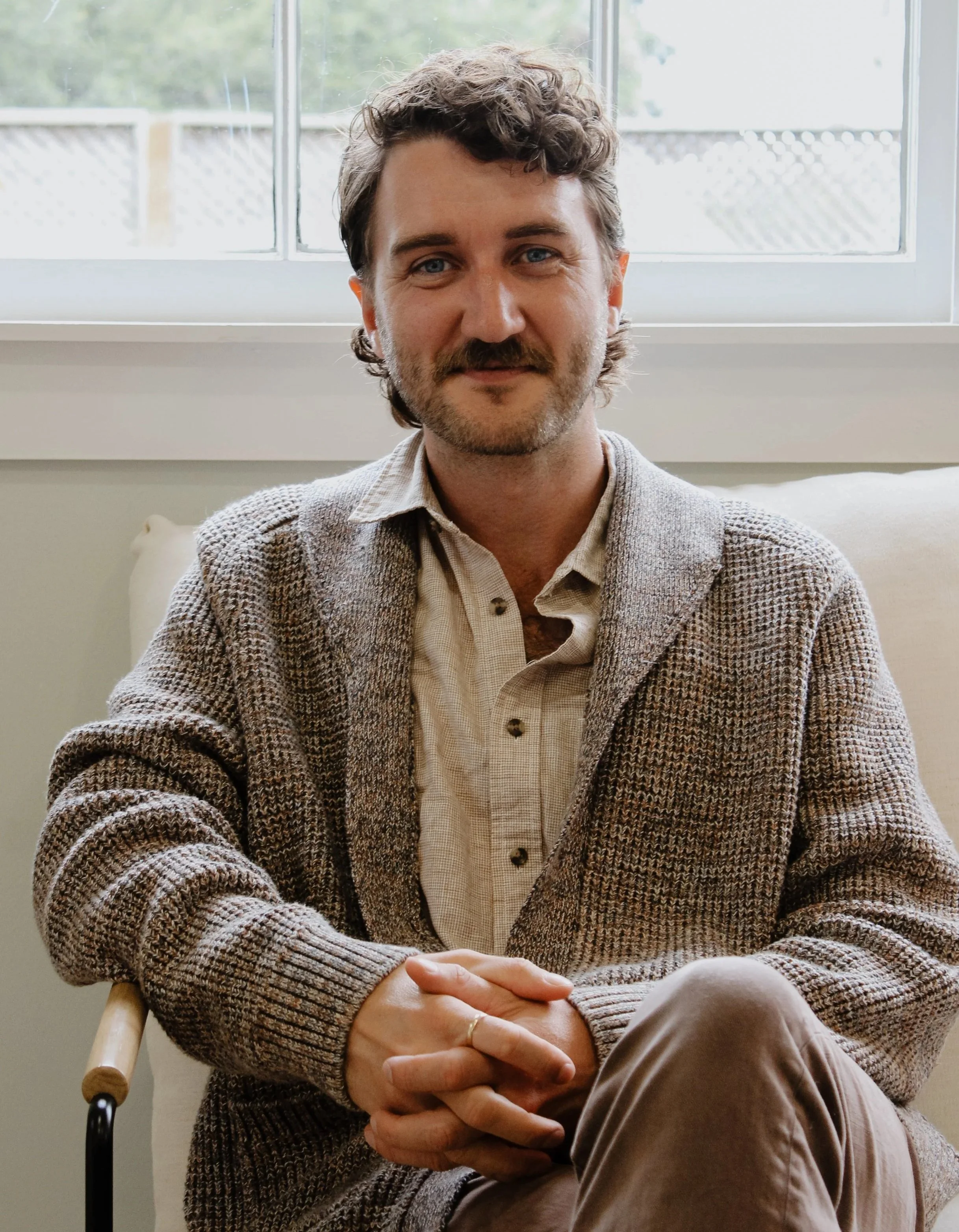
My name is Matt Henson.
I work with adults recovering from various forms of trauma and abuse, and am particularly passionate about helping individuals and couples navigate the impact of sexual abuse in their lives.
I am an alum of The Seattle School of Theology and Psychology, where I studied psychodynamic psychotherapy, with a focus on the treatment of trauma and abuse.
The scope of my work is inclusive to all practices of religion, non-faith, gender expression, and sexual orientation.
Click here to learn more about me.
